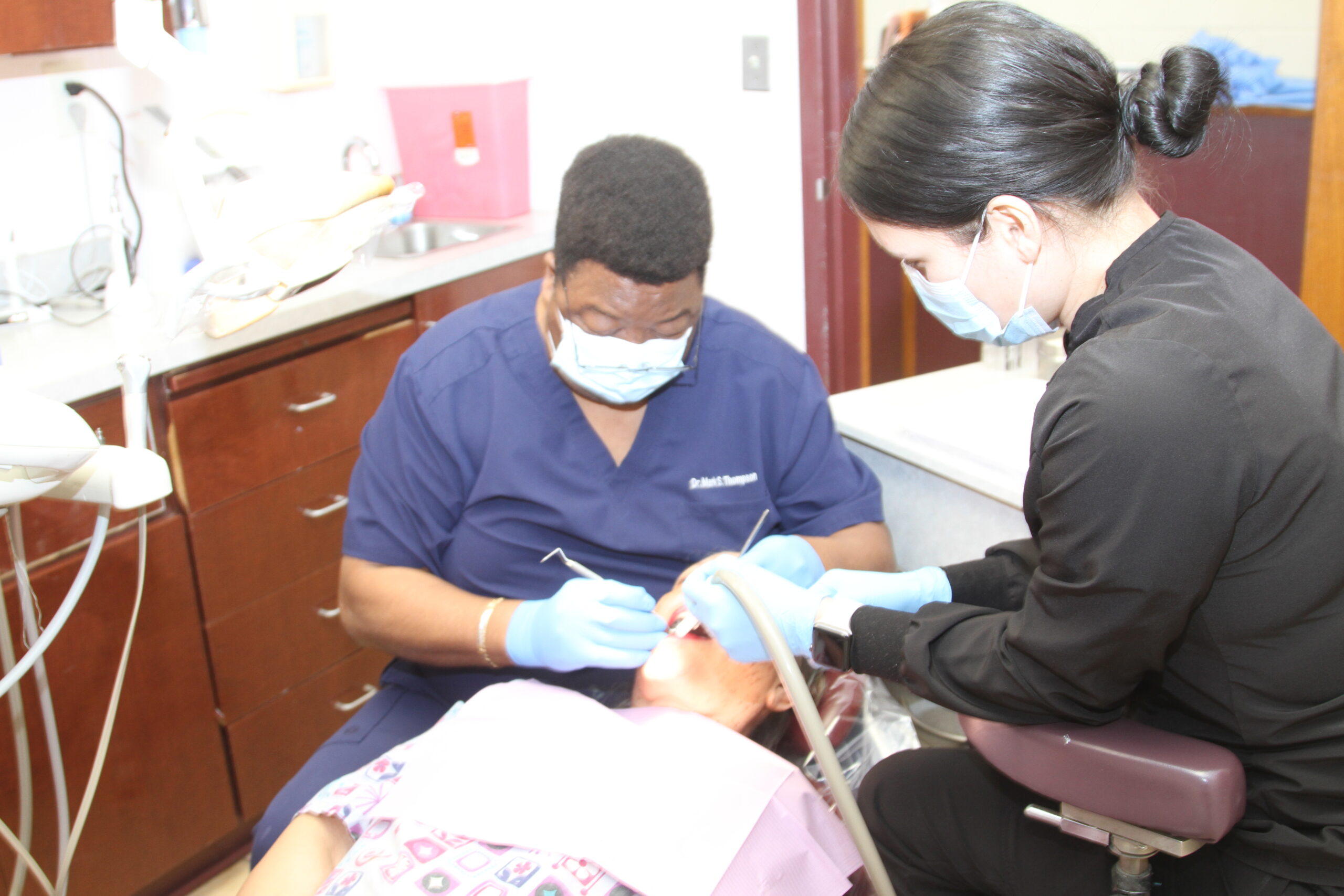
How Often Should You REALLY Go to the Dentist?
We all grew up hearing the golden rule of dental care: “Brush twice a day, floss daily, and see your dentist twice a year.” But as adults juggling busy careers, family obligations, and tight budgets, it is incredibly common to question whether that six-month timeline is a hard medical necessity or just a marketing suggestion.
If your teeth look white in the mirror and you aren’t experiencing any pain, you might be tempted to push your dental checkup off for a year—or even longer. In fact, “how often should I go to the dentist?” is one of the most frequently searched questions online, usually typed by someone trying to justify canceling an upcoming appointment!
At Thompson’s Family Dentistry, we believe in complete transparency with our patients. Today, we are pulling back the curtain on the six-month rule. We will explore where this timeline came from, exactly what happens to your mouth when you skip visits, and how to determine the optimal checkup schedule for your unique smile.
The Origin of the Six-Month Rule
Interestingly enough, the recommendation to visit the dentist twice a year didn’t actually originate from a medical study. It began in the early 20th century as part of a highly successful marketing campaign for Pepsodent toothpaste, heavily supported by the American Dental Association (ADA) to encourage better public hygiene.
However, as modern dental science evolved, clinical research confirmed that the marketers actually hit the nail on the head. For the vast majority of the general population, six months is the exact biological sweet spot for preventing minor oral health issues from turning into irreversible damage.
Why Six Months is the Golden Standard
To understand why you shouldn’t wait a year or two between visits, you have to understand the lifecycle of bacteria in your mouth.
1. The Plaque-to-Tartar Timeline Every time you eat, a sticky, colorless film of bacteria called plaque forms on your teeth. If you are a great brusher and flosser, you remove most of this plaque every day. However, it is virtually impossible to remove 100% of it at home, especially between the teeth and just below the gumline.
When plaque is left undisturbed for just 48 to 72 hours, it begins to calcify and harden into a substance called tartar (calculus). Once tartar forms, your toothbrush and floss are completely useless against it. Tartar is highly porous and acts like a sponge, attracting even more bacteria. It takes roughly six months for tartar buildup to reach a level where it starts causing significant inflammation and damage to your gums.
2. The Progression of Tooth Decay Cavities don’t happen overnight. It takes time for bacterial acids to eat through your hard enamel and penetrate the softer dentin layer inside your tooth. If you visit Thompson’s Family Dentistry every six months, our digital X-rays and visual exams can catch a cavity in its microscopic infancy. At this stage, we can often reverse it with fluoride treatments or fix it with a tiny, painless filling. If you wait a year or two, that tiny spot of decay can quickly rot the inner nerve, resulting in an excruciating toothache and the need for a costly root canal or tooth extraction.
3. Catching Gingivitis Before it is Too Late The tartar buildup we mentioned earlier severely irritates your gums, leading to gingivitis (early gum disease). Your gums may become red, swollen, and bleed when you floss. At the six-month mark, gingivitis is entirely reversible with a professional cleaning. If you skip your appointments, that inflammation spreads to the jawbone, resulting in irreversible periodontitis and eventual tooth loss.
More Than Just a Cleaning: What You Are Missing
When you skip your bi-annual visit, you are missing out on much more than just a polished smile. A routine checkup at Thompsons Family Dentistry includes comprehensive preventative care that protects your overall health.
- Oral Cancer Screenings: This is arguably the most important part of your visit. Oral cancer is highly treatable if caught early, but it rarely presents symptoms or pain in the initial stages. Our dentists are trained to spot microscopic abnormalities on your lips, tongue, cheeks, and throat that you would never notice in the mirror. Visiting us twice a year means you are getting a potentially life-saving screening every six months.
- Checking Existing Dental Work: Fillings, crowns, and bridges do not last forever. They endure massive amounts of bite force every day. We check all your existing restorations to ensure they haven’t cracked or developed leaks, preventing new decay from forming underneath them.
- Monitoring Systemic Health: Your mouth is the gateway to your body. Over 90% of systemic diseases (including diabetes, leukemia, heart disease, and kidney disease) produce oral symptoms. Often, your dentist is the first healthcare provider to notice signs of a larger medical issue.
The Exceptions: Who Needs to Go MORE Often?
While six months is the standard for a healthy adult, oral healthcare is not one-size-fits-all. The ADA officially recommends that the frequency of your visits be tailored to your specific oral health status.
There are several scenarios where we will recommend that you visit Thompson’s Family Dentistry every three to four months (3-4 times a year) for specialized periodontal maintenance or extra cleanings:
- You Have a History of Gum Disease: Periodontitis can be halted, but it cannot be cured. If you have deep gum pockets, bacteria repopulate those spaces in about 90 days. A three-month cleaning cycle is mandatory to keep the disease from progressing and destroying your jawbone.
- You Are Pregnant: The massive surge in pregnancy hormones greatly increases your risk for “pregnancy gingivitis.” Furthermore, severe gum disease is clinically linked to premature birth and low birth weight. Pregnant women should be seen frequently to protect both themselves and their baby.
- You Are a Smoker: Tobacco use restricts blood flow to the gums, masking the bleeding that usually warns you of gum disease, while simultaneously increasing tartar buildup and oral cancer risk.
- You Are Diabetic: Diabetics are highly prone to oral infections, and conversely, severe gum disease makes it much harder to control blood sugar levels.
- You Are Prone to Cavities: Some people simply have a genetic predisposition to decay, weaker enamel, or a dry mouth (often caused by daily medications). More frequent fluoride varnishes and monitoring are required to keep their teeth intact.
The Financial Argument for Frequent Visits
We frequently hear patients say they are skipping the dentist to save money. Unfortunately, in the world of dentistry, delaying care is the most expensive mistake you can make.
Preventative care—cleanings, exams, and X-rays—is the most affordable service we offer, and it is usually covered at 100% by dental insurance. Restorative care—crowns, root canals, and dental implants—is significantly more expensive. By investing a small amount of time and money twice a year, you are effectively insuring yourself against massive, unexpected dental bills in the future.
Schedule Your Checkup Today
So, how often should you really go to the dentist? For most, twice a year is the magic number to keep your smile bright, your breath fresh, and your body healthy. For others, it might be more frequent.
The only way to know your optimal schedule is to have a professional baseline established. If it has been more than six months since you last sat in a dental chair, don’t let embarrassment or fear keep you away. At Thompson’s Family Dentistry, we offer a completely judgment-free environment. We are just happy you are here!
Protect your health and your wallet by taking proactive steps today. Contact Thompson’s Family Dentistry to schedule your comprehensive checkup and cleaning—your future self will thank you! Call Us today @ 910 875-3625
 Previous Post